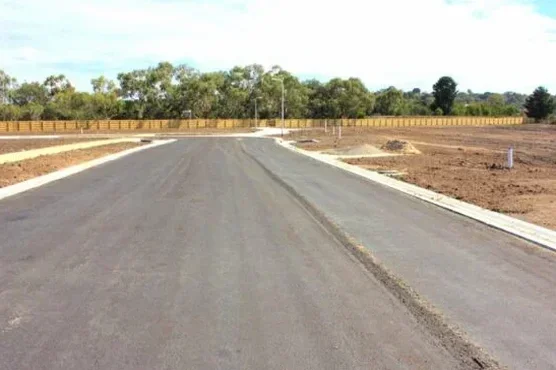
A recent industrial subdivision near the Ahuriri Estuary revealed what we often see in Napier: a stiff gravel layer at 1.5 metres, then loose, saturated silts below. The developer had assumed uniform bearing, but the variability would have led to differential settlement under rigid panels. Our team ran a site-specific rigid pavement design using NZS 3404 and NZGS characterisation methods, modelling the slab as a structural plate on an elastic foundation. The solution saved the client from over-excavation while protecting the concrete from joint faulting over the 30-year design life. In a city where the water table sits just 2 metres down in many post-1931 uplift areas, plate load testing provides the modulus of subgrade reaction values that software like EverFE demands, and we often combine it with CPT soundings to map the vertical extent of softer lenses beneath the gravel cap.
In Napier, a rigid pavement is a structural slab on springs — the springs are your subgrade, and if they vary, the slab cracks. We design to control where it cracks, not if.
Process overview
The most common mistake we encounter in Napier is treating rigid pavement like a simple ground slab, ignoring the combined stresses from thermal curling and heavy forklift axle loads. A concrete pavement here works as a bending plate, not a compression mat. Our design process starts with a full geotechnical model of the founding layer, then moves into finite-element analysis where we check tensile stresses at the bottom of the slab under edge-loading conditions. We define joint spacing, dowel bar diameter, and reinforcement mats according to NZS 3404 and the NZ Transport Agency supplement. In the coastal industrial belt between Pandora and Awatoto, salt-laden air accelerates corrosion of steel dowels, so we specify epoxy-coated or stainless alternatives.
The mix design itself is critical: we prescribe minimum cement content of 350 kg/m³, water-cement ratio below 0.45, and air entrainment of 5–7% for freeze-thaw resistance — yes, Napier does get frosts in winter. We also run alkali-silica reactivity tests on Greywacke aggregates sourced from local quarries, because reactive aggregate has caused premature cracking in several Hawke's Bay pavements. The
CBR road investigations we perform on the subgrade help calibrate the foundation stiffness for the Westergaard equations, ensuring the slab thickness is neither wasteful nor risky.
Reference standards
NZS 3404: Steel Structures Standard (dowel design, reinforcement), NZS 4203: General Structural Design and Design Loadings, NZS 1170.5: Seismic Actions (spectral accelerations for Napier), NZTA M/10 Specification: Dense Graded Asphaltic Concrete, NZGS Guidelines: Geotechnical Investigation for Pavement Structures, ISO 17025: General requirements for the competence of testing laboratories
Questions and answers
What is the typical cost range for a rigid pavement design package in Napier?
For a standard industrial or commercial rigid pavement design in Napier, including geotechnical investigation, thickness design, joint detailing, and construction specifications, the fee typically ranges from NZ$3,150 to NZ$10,540 depending on the area and traffic loading complexity.
Why choose rigid pavement over flexible asphalt for a Napier industrial yard?
Rigid pavement distributes wheel loads over a wider area, reducing stress on the subgrade — a critical advantage in Napier's variable post-1931 soils. It also resists diesel and oil spills far better than asphalt, requires less maintenance, and reflects heat, keeping the yard cooler during Hawke's Bay summers.
How do you account for seismic risk in Napier rigid pavement design?
We apply NZS 1170.5 spectral accelerations for the site's specific soil class and model the pavement as a plate on Winkler springs. If subsurface investigation reveals liquefiable layers, we design ground improvement — such as stone columns or dynamic compaction — before the cement-treated subbase is placed, ensuring the slab retains support during and after a seismic event.