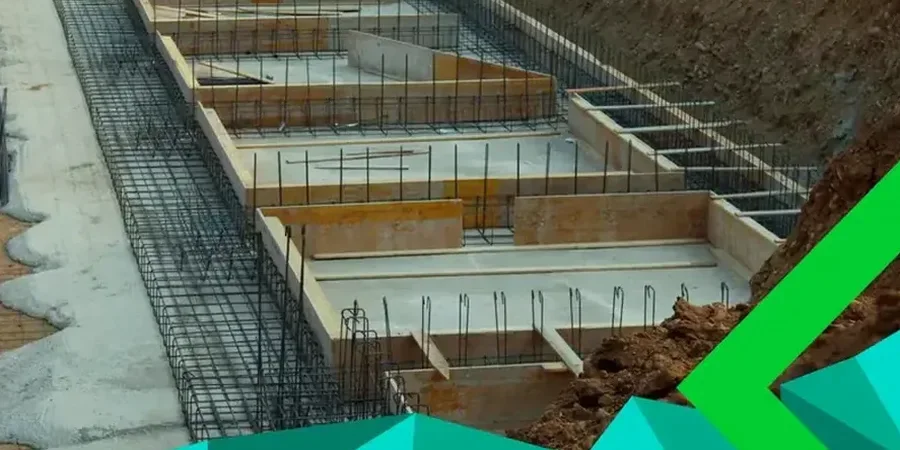
Napier sits on a coastal plain shaped by the Tukituki River and underlain by interbedded gravels, sands, and silts that shift character dramatically within a few hundred metres. The 1931 earthquake literally raised the seabed by over two metres, so we are dealing with young, variable deposits where bearing capacity can swing from 150 kPa to well over 300 kPa on the same site. A shallow foundation design that ignores this patchwork geology is gambling with differential settlement. We run borehole-calibrated CPT testing on every project because cone resistance profiles reveal thin soft lenses that a standard SPT log can miss. The regional water table is often within two to three metres of the surface, adding buoyancy and liquefaction considerations that the NZGS guidelines explicitly address for the Hawke's Bay basin.
In Napier, a shallow foundation is not a simple pad — it is a seismic fuse that must transfer 0.3g ground accelerations without rotating beyond serviceability limits.
Process overview
Napier's population of roughly 67,000 is spread across flat to gently undulating terrain, but the shallow soils hide a critical fact: the area sits in Seismic Zone C per NZS 4203, with a design PGA that routinely exceeds 0.3g for a 500-year return period. This means every shallow foundation must accommodate cyclic loading without excessive rotation. We typically model strip and isolated footings in PLAXIS 2D using undrained shear strength parameters from consolidated-undrained triaxial tests on undisturbed Shelby tube samples. For lightly loaded residential slabs, we specify a minimum 300 mm compacted hardfill layer over a geotextile separator to bridge soft spots. Where the bearing stratum is marginal, we widen the footing footprint rather than deepen the excavation, keeping earthworks costs down while satisfying the ultimate limit state checks required by NZS 3404. The interplay between static settlement and seismic tilt governs the final geometry.
Questions and answers
What does shallow foundation design cost for a standard Napier residential site?
For a typical single-dwelling site with a single-storey structure, you are looking at NZ$2,840 to NZ$5,150. The spread depends on whether we need a CPT rig, how many Shelby tubes are taken, and the complexity of the seismic modelling. Sites with liquefaction-prone layers push the fee toward the upper end because we add cyclic triaxial testing and more detailed NZGS Module 5 checks.
How deep do you take the investigation before sizing the footings?
We investigate to at least twice the footing width below the bearing level, and deeper if soft layers are suspected. In Napier's alluvial profile that usually means 3 to 5 metres for a typical 1.2-metre-wide strip footing. If the water table is encountered, we extend the borehole or CPT sounding to capture the full saturated profile.
Can you design a shallow foundation on a site that liquefied in 1931?
Yes, provided we quantify the residual strength of the liquefiable layer. We run CPT-based liquefaction triggering analysis using the Boulanger and Idriss (2014) procedure, then calculate post-liquefaction settlement. If the predicted settlement exceeds 25 mm, we either deepen the bearing stratum below the liquefiable zone or switch to ground improvement before placing the footings.