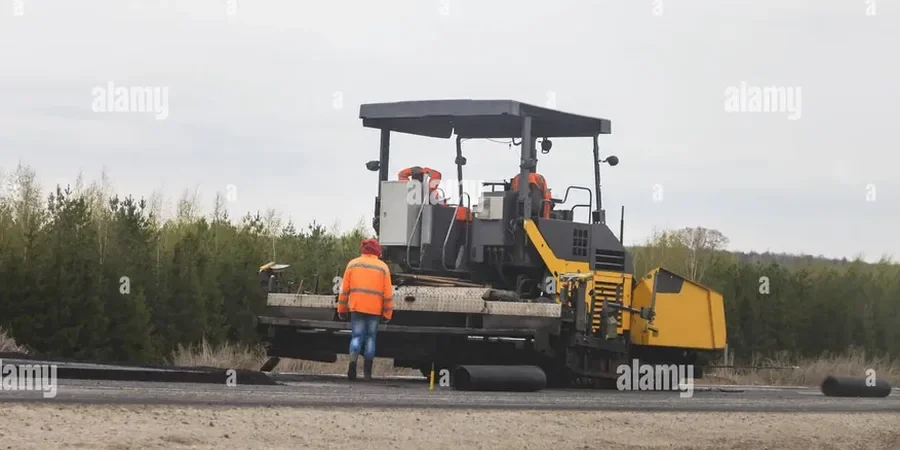
A recent road reconstruction project we supported near the Ahuriri Estuary showed exactly why Napier's ground profile demands a careful flexible pavement design. The tidal influence on the water table, combined with lenses of soft alluvial silt beneath the historic lagoon deposits, meant that standard CBR assumptions from a desktop study would have been dangerously optimistic. We tested the subgrade across three tidal cycles before confirming the design modulus, because in our experience, the marine clay pockets around Pandora and Westshore can lose over 40% of their stiffness when saturated. A test pit investigation provides the first reliable look at these hidden layers, and when traffic loading is heavy, a CBR road assessment quantifies the bearing capacity that shapes the entire pavement structure.
Napier's pavement life isn't just about traffic counts; it's about how the Heretaunga Plains subgrade reacts when the water table rises after a Hawke's Bay winter storm.
Local context
The risk profile for flexible pavement design changes dramatically between a site on the elevated gravel terraces of Greenmeadows and one on the low-lying silts of Marewa. On the terraces, the primary failure mode we encounter is shear deformation in thin asphalt layers over a stiff but poorly compacted subbase; rutting appears within three to five years if the aggregate interlock degrades. Down on the plains, the danger shifts to subgrade pumping and longitudinal cracking at the pavement edge, especially where the groundwater sits less than a metre below the formation level. Napier's post-earthquake rebuild also left a legacy of mixed fill in some suburban streets, and we have pulled cores where the pavement thickness varied by over 80 millimetres within a 20-metre run. A design that ignores these local micro-conditions will fail at the weakest point, and that point is rarely visible from the surface.
Reference standards
NZS 3404:1997 (Steel structures — relevant for integral pavement components), NZS 4407:2015 (Methods of sampling and testing road aggregates), NZGS guidelines: geotechnical investigation for pavement design, Austroads Guide to Pavement Technology (Part 2: Pavement Structural Design, adopted by NZTA), NZTA M/10 Specification for dense graded and stone mastic asphalts
Questions and answers
How much does a flexible pavement design investigation cost for a residential subdivision in Napier?
For a typical residential subdivision in Napier requiring subgrade investigation and pavement thickness design, the cost ranges from NZ$2,910 to NZ$9,580 depending on the number of test pits, CBR tests, and aggregate evaluations needed. A small cul-de-sac might fall at the lower end, while a multi-street development with variable ground conditions and heavy vehicle access points will require more extensive sampling and laboratory work.
What subgrade strength values do you typically find in Napier and how do they affect pavement thickness?
In the Heretaunga Plains area, soaked CBR values commonly range from 3% to 7% in the alluvial silts, though we have measured values as low as 1.5% in organic-rich lenses near the old lagoon margins. These low strengths require either a thicker granular pavement structure or a stabilised subgrade layer. On the gravel terraces of Taradale and Greenmeadows, CBR values above 15% are achievable, allowing for a thinner pavement — but only if the aggregate quality and drainage design are both confirmed by laboratory testing.
How do you account for Napier's seismic conditions in flexible pavement design?
While flexible pavements are inherently more tolerant to seismic movement than rigid ones, we still evaluate the potential for subgrade liquefaction and lateral spreading using NZGS guidelines, especially in the low-lying areas north of the city center. If the subgrade is susceptible, the pavement design may incorporate a reinforced geogrid layer or a thicker aggregate raft to bridge potential ground cracks. We also consider post-earthquake serviceability: a pavement that survives the shaking but loses drainage continuity will still fail within months, so we pay close attention to the filter and separation layers between the subgrade and the basecourse.