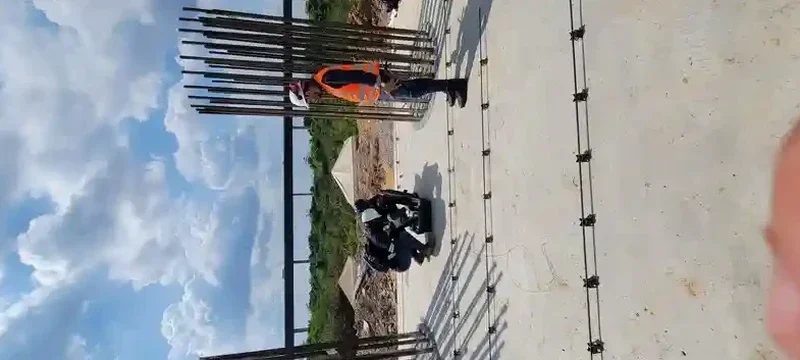
Napier’s warm, dry climate and coastal setting can give a false sense of security, but the gravels and silts that make up the Heretaunga Plains hide a much more demanding seismic reality. With the city sitting on sediments that amplify shaking—as the 1931 earthquake painfully proved—getting the shear wave velocity right isn’t a box-ticking exercise; it’s the difference between a foundation design that holds and one that underestimates site period. Our MASW survey campaigns map VS30 across the full footprint, from Ahuriri’s reclaimed margins to the tighter sites on Bluff Hill, giving structural engineers the site class they need under NZS 3404 without waiting weeks for borehole-only interpretations. When the near-surface geology changes within half a section, combining surface-wave data with a targeted seismic refraction line often reveals velocity inversions that a single method would miss.
A measured VS30 profile from MASW transforms Napier site classification from a guesswork correlation into a defensible engineering parameter under NZGS guidelines.
Questions and answers
How long does a MASW survey take on a typical Napier residential section?
For a standard 600–800 m² section we normally complete two array setups in one field day, provided vehicle access is straightforward. Processing and reporting add another two to three working days. Tighter sites or those with heavy traffic noise can require an extra setup, but we’ve rarely needed more than a day and a half on the ground in Napier.
Can you run MASW on a paved site without breaking the surface?
Yes, and we do it regularly on warehouse slabs and sealed carparks around Onekawa and Pandora. We use a steel strike plate with a dense rubber mat underneath; the coupling stays solid and the asphalt doesn’t crack. The geophones are fixed with quick-set plaster pucks that pop off cleanly after the survey.
What does a MASW / VS30 survey cost for a Napier project?
Budget between NZ$3,030 and NZ$5,280 for a single-line MASW array with full VS30 reporting. The final figure depends on array length, number of setups, and whether you need combined refraction or ambient-noise HVSR added. We’ll give you a fixed-price proposal once we’ve seen the site plan.
Does Council accept MASW-derived VS30 for building consent in Napier?
Napier City Council and their peer reviewers routinely accept surface-wave VS30 data when it’s processed in accordance with NZGS Module 3 and reported with the raw dispersion curves and inversion parameters. We include the full phase-velocity spectrum and misfit values in every report so the reviewer can see exactly how the profile was derived.