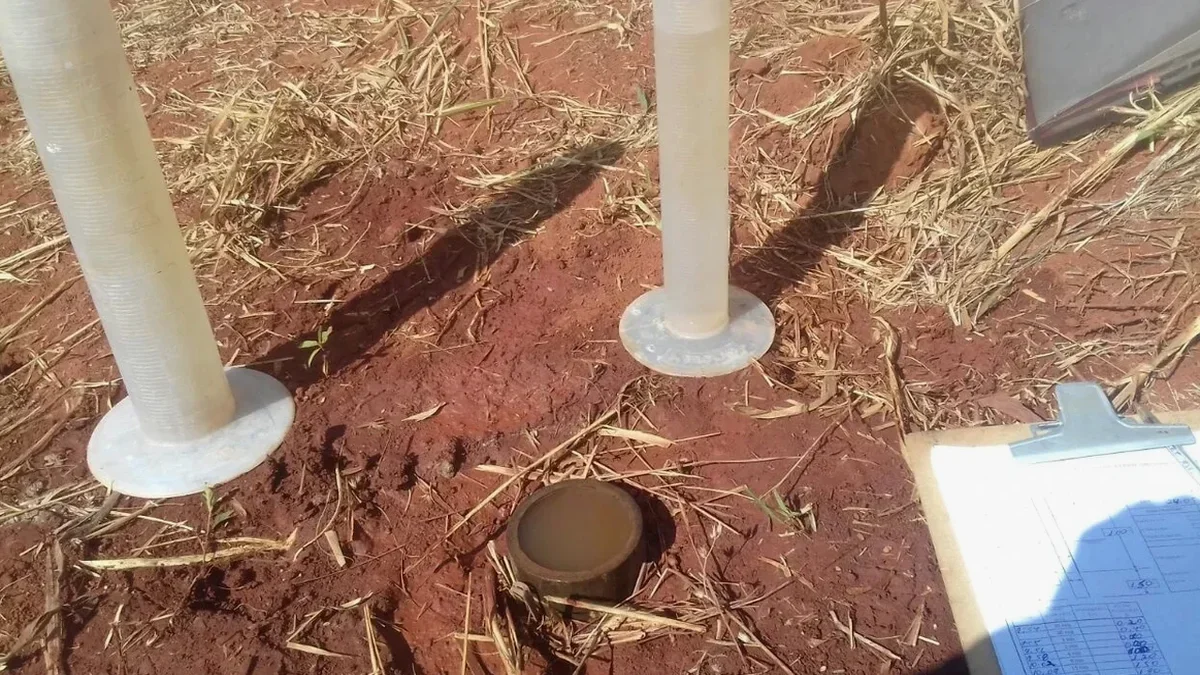
Napier’s subsurface tells a story of alluvial gravels, loose sands, and silts deposited by the Tutaekuri River and ancient sea-level changes. On the surface, the art deco skyline looks solid. Underground, the picture gets complicated fast. The water table sits high across much of the Heretaunga Plains, often within two metres of ground level, and that makes hydraulic conductivity a first-order concern for any excavation deeper than a car park lift. When we run a field permeability test (Lefranc/Lugeon), we are not chasing a lab number. We are measuring how water actually moves through the formation at the depth that matters for your footing drain, your retaining wall, or your basement slab. In a city where post-cyclone groundwater has rewritten site classifications overnight, that in-situ data is non-negotiable. For deeper investigations we pair the permeability profile with CPT testing to cross-check stratigraphy without losing the continuous pore-pressure record.
One site, one borehole, five pressure stages, and a number that defines how much water your excavation will have to handle.
Process overview
Napier sits just two metres above mean sea level across much of the CBD, and the 1931 earthquake lifted the coast by roughly that same amount. That tectonic history left behind a layered stratigraphy: Holocene fluvial gravels over Plio-Pleistocene limestone and mudstone, with permeability contrasts that can vary by three orders of magnitude across a single site. The Lefranc test gives us point measurements in soil at the base of a borehole, typically using a constant or falling head procedure as described in the NZGS soil and rock description guidelines. The Lugeon test extends the principle to fractured rock, where we inject water under pressure in five stages, following Houlsby’s interpretation. The output is not a single coefficient; it is a lugeon value tied to fracture aperture and spacing. On a recent mixed-profile site near Ahuriri, we ran Lefranc tests in the gravels and Lugeon tests in the underlying limestone, and the contrast was stark: 5×10⁻⁵ m/s in the gravels versus 2 Lugeon units in the rock. That difference dictated two completely different dewatering strategies.
Local context
A row of townhouses going up on a former orchard site near Taradale. The geotech report assumed moderate permeability based on regional mapping. Nobody ran an in-situ test. They dewatered with two spears. Two weeks into excavation, the sides started slumping, and the sump pump was running 24/7. The actual k was an order of magnitude higher than the desk-study value. The contractor lost three weeks, redesigned the drainage, and brought in a vacuum-assisted system. A Lefranc test at three depths during the investigation phase would have cost a fraction of that delay. The same applies in rock: we have seen Lugeon values jump from 1 to 15 across a single joint set in the Te Aute limestone, and if you miss that, your grout curtain is under-designed from day one. In Napier, where groundwater levels respond fast to rainfall and king tides, permeability is not a static parameter. It has to be measured, not guessed.
Questions and answers
When is a Lugeon test required instead of a Lefranc test?
The Lugeon test is specifically for fractured rock. If your borehole encounters limestone, greywacke, or mudstone with visible jointing below the soil or weathered zone, a Lugeon test measures the hydraulic conductivity of the discontinuities under controlled injection pressure. The Lefranc test is for soil: gravels, sands, silts. On mixed-profile sites common across Napier, we often run both in the same borehole, switching methods at the soil-rock interface.
How does the high water table in the Heretaunga Plains affect test results?
A shallow water table is actually an advantage for Lefranc testing: it simplifies test setup because the test zone is already saturated, and falling-head tests can be run without pre-soaking. The key is to install a temporary casing to seal the borehole above the test interval and prevent short-circuiting to the surface. In Lugeon testing, a high groundwater level means injection pressures must be referenced to the natural piezometric surface, which we measure with a transducer before the test begins.
What does a field permeability test cost in Napier?
A Lefranc or Lugeon test typically ranges from NZ$1,110 to NZ$1,990 per interval, depending on depth, access, drilling method already on site, and the number of intervals tested. The cost includes the test procedure, data acquisition with calibrated flow meters and pressure transducers, and interpretation reported under NZGS guidelines. Mobilisation and borehole drilling are priced separately.
Can permeability test results be used directly for dewatering design?
Yes, and that is one of the primary uses. The hydraulic conductivity from Lefranc tests feeds straight into analytical formulas for wellpoint and deep-well dewatering. For Lugeon tests in rock, the lugeon value is correlated to grout-take estimates and curtain design. However, a single test interval is rarely sufficient. We recommend at least three test depths across the zone that will be dewatered, plus one in the underlying aquitard if present, to capture vertical heterogeneity.