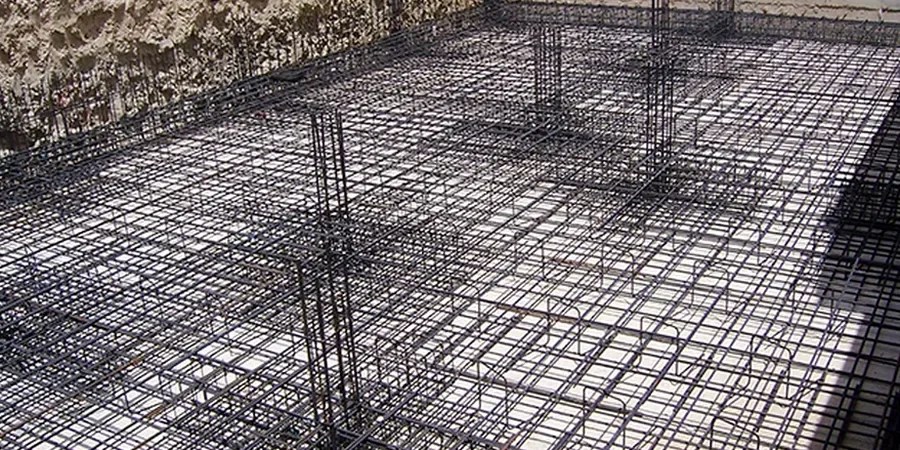
The marine-cut terraces and alluvial plains around Napier don’t offer the same ground from one site to the next. Moisture-laden silts from old lagoon beds sit beside free-draining gravels near Hospital Hill, and the 1931 earthquake left a legacy of subsidence and fill that still shapes building regulations today. A raft foundation design becomes essential when isolated footings can’t handle differential settlement or when the water table sits less than two metres below grade. By distributing structural loads across a continuous slab, the raft reduces point pressures on variable Hawke’s Bay soils—something we’ve confirmed across dozens of projects from Westshore to Greenmeadows. The design process pulls together seismic demand under NZS 1170.5, bearing capacity assessment under NZGS guidelines, and liquefaction avoidance strategies that reflect the latest GNS Science hazard mapping for the Heretaunga Plains. For softer profiles where ground improvement is needed before placing the slab, our team often combines the mat analysis with a stone columns assessment to verify post-treatment stiffness.
In Napier’s post-1931 fill zones, a well-calibrated raft design can reduce differential settlement by over 60% compared to isolated footings.
Process overview
Napier sits on a complex stratigraphy of Holocene alluvium that transitions from sandy gravels near the old Tutaekuri River path into soft estuarine clays around Pandora and Ahuriri. In several borings across Taradale, we’ve encountered 3 to 5 metres of loose silty sand over firm pumiceous gravels—a profile that demands careful modulus selection for the slab-on-ground model. A raft foundation design in this context isn’t simply a thickened slab; it’s a fully integrated geotechnical-structural model that accounts for edge heave in expansive clays, long-term consolidation settlement, and kinematic soil-structure interaction during a design-level earthquake. Our parameterisation follows NZS 3404 for steel reinforcement detailing and NZS 3604 for minimum foundation depths, but the geotechnical inputs draw on site-specific CPTu data and laboratory consolidation curves. Where the bearing stratum is irregular, finite element modelling lets us map contact pressure distribution and identify zones needing local subgrade stiffening. The result is a foundation that performs predictably even when the ground beneath it doesn’t.
Local context
Napier’s population of roughly 67,500 lives on terrain that shook violently in 1931, and the Heretaunga Plains remain one of New Zealand’s highest seismic hazard zones. A raft foundation that ignores liquefaction-induced bearing loss in the upper 3 metres of silty sand can tilt irreparably during a moderate event—even if structural design follows the code to the letter. The Ahuriri Lagoon area is particularly sensitive because the groundwater table sits just 1.5 metres below the surface for much of the year, and loose Holocene sediments extend 10 to 15 metres deep. Without a site-specific settlement analysis that models excess pore pressure dissipation, the slab can undergo post-earthquake differential movement that exceeds serviceability limits within the first decade. We treat the raft not as a standalone element but as part of a ground-improvement strategy when needed, verifying that the improved subgrade meets the stiffness assumptions built into the structural model. Cutting corners on that geotechnical loop is the single most expensive mistake a Napier build can make.
Questions and answers
What does a raft foundation design cost for a typical Napier residential project?
For a standard single-storey residential raft on a Napier section, the geotechnical investigation and structural design package typically falls between NZ$1,640 and NZ$7,760, depending on site access, number of CPT or borehole locations, and complexity of the ground profile. Sites in liquefaction-prone areas near Ahuriri or Pandora tend toward the upper end because the analysis requires additional cyclic triaxial data and pore pressure modelling.
How does Napier’s 1931 earthquake history affect current raft design requirements?
The 1931 Hawke’s Bay earthquake raised the coastline and left extensive fill deposits across what is now residential and commercial Napier. These fills, along with the regional seismicity, mean that raft designs must consider both liquefaction in natural loose sediments and variable compressibility of anthropogenic fill. MBIE guidance developed after the Canterbury earthquakes is routinely applied here to assess foundation performance on similar ground.
What site investigation is needed before designing a raft foundation in Napier?
At minimum, we require CPTu soundings or boreholes to at least 15 metres depth—or until refusal on competent gravels—to characterise the Holocene sequence. The investigation must capture the groundwater level in winter, collect undisturbed samples for consolidation testing, and assess liquefaction susceptibility per NZGS Module 5. For sites with more than 2 metres of fill, a test pit can help confirm the fill composition.
Can a raft foundation be used on a sloping Napier section?
Yes, but it requires a stepped or split-level raft configuration with deepened edge beams on the cut side. The design must account for the increased lateral earth pressure on the upslope edge and potential differential stiffness between cut and fill zones. We model the slab in 3D to verify that the reinforcement detailing handles the bending moments induced by the grade change.