← Home · Investigation

Cone Penetration Testing (CPT) in Napier – Precise Subsurface Data for Hawke’s Bay Projects

Together, we solve the challenges of tomorrow.

LEARN MORE →

Napier’s subsurface is a complex layering of alluvial silts, sands, and gravels deposited by the Tutaekuri River across the Heretaunga Plains. With a shallow groundwater table often found within 2 to 4 metres of the surface and the city’s history of the 1931 earthquake, every foundation design here demands high-resolution geotechnical data. A CPT (Cone Penetration Test) cuts through the guesswork by recording tip resistance, sleeve friction, and pore pressure continuously with depth. Unlike traditional drilling, the cone picks up thin liquefiable sand lenses that SPT intervals can miss—critical information when you’re building near Marine Parade or the Ahuriri waterfront. For a broader picture we often pair CPT profiles with Sondaje SPT where gravel layers dominate, giving engineers both continuous cone data and sample recovery where it matters.

A continuous CPT trace through Napier’s alluvial deposits reveals thin liquefiable layers that standard SPT sampling intervals routinely overlook.

Methodology and scope

We recently worked on a multi-storey structure near Emerson Street where the initial geotech desk study flagged possible paleochannel deposits crossing the site. You can’t map that with a handful of boreholes alone. We pushed a 20-tonne CPT rig through interbedded sands and silts to 18 metres, capturing a clear shift in friction ratio that confirmed an old river channel at 11 metres depth. The data fed directly into a Plaxis 2D model for settlement analysis, and the structural engineer adjusted the pile lengths before a single pile was cast. When gravel refusal stops the cone, switching to a test pit lets us log the coarse fraction directly and tie the CPT profile to a visible section. For projects where bearing capacity governs, supplementing CPT data with a plate load test at footing level provides direct modulus values that even the best empirical correlations cannot replace.
Cone Penetration Testing (CPT) in Napier – Precise Subsurface Data for Hawke’s Bay Projects
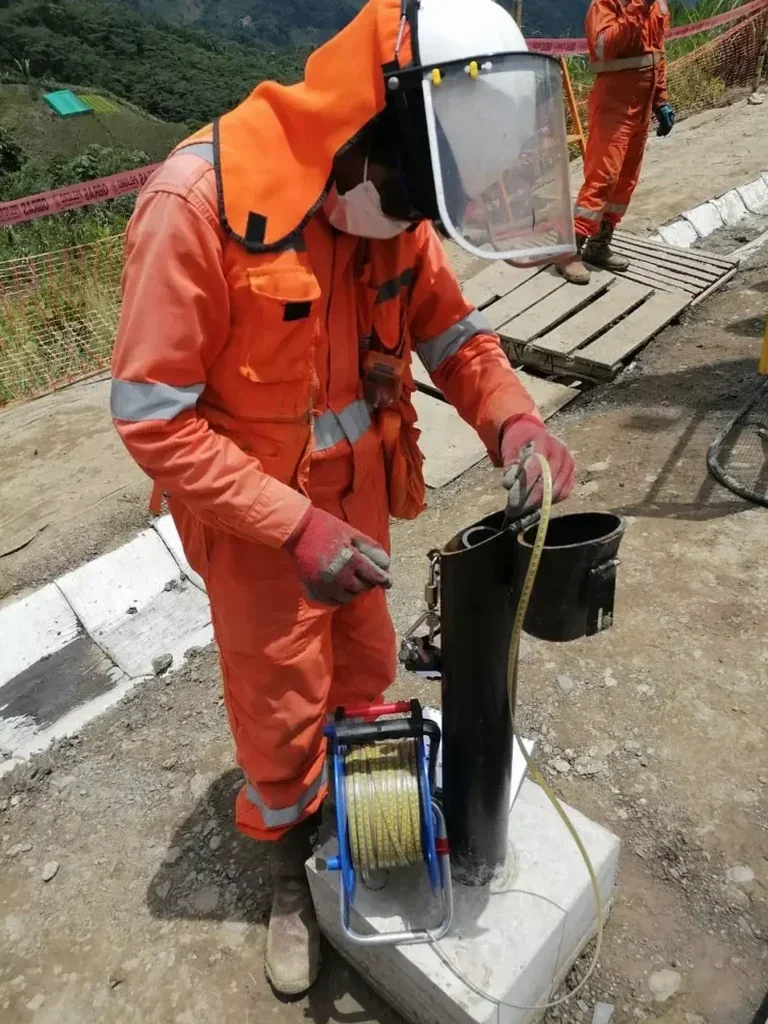
Technical reference image — Napier

Local considerations

Between 1931 and the post-earthquake rebuild, Napier was essentially redesigned on ground that had just proven its vulnerability. Today, developers face a regulatory environment shaped by that event—particularly around liquefaction triggering and lateral spreading. The silty sands and interbedded clays beneath the city centre can lose strength rapidly under seismic loading, and a standard borehole log won’t always catch the subtle change from non-liquefiable to liquefiable material. The CPT’s real-time pore pressure dissipation tests let us estimate consolidation rates and drainage conditions far more reliably than lab tests on disturbed samples. When a Hawke’s Bay council reviewer questions your foundation depth assumptions, having a continuous CPT trace with corrected cone resistance (qt) and soil behaviour type index (Ic) mapped against the liquefaction assessment framework turns a three-week delay into a one-day clarification.

Need a geotechnical assessment?

Reply within 24h.

Email: [email protected]

Technical parameters

ParameterTypical value
Cone capacity (nominal)20 t push force
Maximum penetration depthUp to 25 m (soil-dependent)
Parameters recordedqc, fs, u2 (piezocone)
Soil Behaviour TypeSBT index (Robertson, 1990)
Standard complianceNZS 3404, NZGS Module 1
Typical testing rate20 mm/s ± 5 mm/s
Pore pressure dissipationRecorded at target depths

Associated technical services

01

Piezocone (CPTu) Profiling

Continuous logging of qc, fs, and pore pressure (u2) with dissipation tests at specified intervals. Ideal for liquefaction triggering analysis per NZGS Module 4 and settlement estimates in the silty soils common across Napier.

02

Interpretative Geotechnical Report

We process raw CPT data into design parameters: undrained shear strength (Su), constrained modulus (M), overconsolidation ratio (OCR), and soil behaviour type (SBT). The report includes depth plots, friction ratio trending, and commentary tied to your foundation or retaining wall design.

Applicable standards

NZS 3404 – Steel Structures Standard (pile design inputs), NZS 4203 – General Structural Design and Design Loadings, NZGS Geotechnical Module 1 – Site Investigation Guideline, MBIE/NZGS Earthquake Geotechnical Engineering Practice Module 4

Questions and answers

What depth can a CPT reach in Napier’s soils?

Most sites on the Heretaunga Plains allow penetration to 15–20 metres before encountering dense gravels or refusal. Our 20-tonne rig pushes through medium-dense sands and stiff silts reliably. If gravel layers stop the cone early, we recommend complementary test pitting or SPT drilling to extend the profile.

How much does a CPT test cost in Napier?

For a standard CPT sounding to 15–20 metres with full piezocone data and a basic interpretative report, budget between NZ$260 and NZ$410 per metre of penetration. Mobilisation and site-specific access requirements may adjust the final figure. We provide a fixed quote after reviewing your site location and depth requirements.

Can CPT data be used directly for pile design?

Yes. CPT-derived parameters—particularly unit tip resistance (qc) and sleeve friction (fs)—feed directly into pile capacity methods like LCPC, ICP-05, and Fugro-05. Our reports provide both raw and corrected cone values formatted for direct input into your pile design spreadsheet or geotechnical software.

How soon can you mobilise a CPT rig in Napier?

We typically schedule CPT testing within 5 to 7 working days of confirmation, depending on current site workload across Hawke’s Bay. Urgent testing for active construction sites can often be arranged sooner—contact us with your timeline and we’ll confirm availability.
Location and service area

We serve projects in Napier and surrounding areas.

View larger map